
Alumni Spotlight: Morgan Richard
February 20, 2026
What did you study at LSU, and what year did you graduate?
I earned my degree in Animal, Dairy, and Poultry Science with a concentration in Dairy Production and a minor in Agriculture, graduating in 2016. I went on to complete my Doctor of Veterinary Medicine at the Louisiana State University School of Veterinary Medicine, graduating in 2020. Most recently, I received my Master of Public Health in 2023.
Tell us about your current role and what you enjoy most about it.
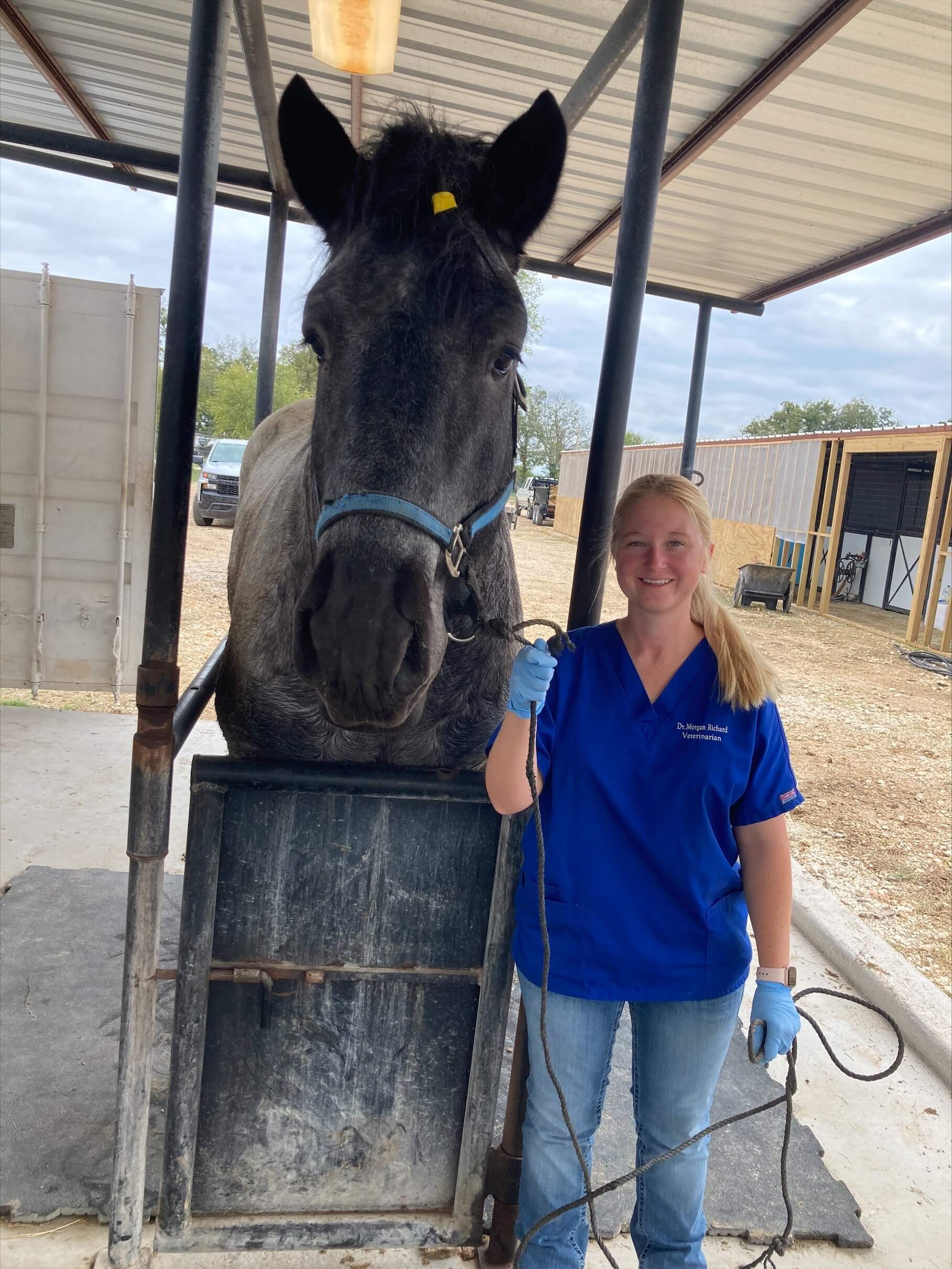
I currently serve as a Supervisory Veterinary Medical Officer for the United States Department of Agriculture (USDA). Specifically, my position is within port services on the US/Mexico border. My main duties include conducting health exams on livestock imports and exports, managing equine quarantine facilities, enforcing national animal health regulations, and serving as a liaison between national and international agencies. I love the opportunities that working as a regulatory veterinarian has allotted to me. Traveling to new states and countries, facilitating foreign dignitary visits, conducting international animal health audits, and securing the border against foreign animal diseases are just a few of the unique opportunities this position has granted me. Additionally, continual training to improve my professional and technical skills is a profound benefit of being a federal veterinarian. A final immeasurable joy of my job is working alongside fellow regulatory veterinarians that are as passionate as I am about public health.
What was your career path like after graduating? Any unexpected turns?
While in undergrad, I explored several career options but ultimately settled on veterinary medicine due to the diversity of the field. After graduating from LSU with my Bachelor’s degree, I immediately started at LSU School of Veterinary Medicine. While in veterinary school, I knew that my interest was growing towards livestock and public health rather than traditional small animal clinical work. The COVID-19 pandemic interrupted my final months of clinics and graduation. During that time, I was referred to a job announcement for a port veterinarian within the USDA. While I was leaning towards regulatory work, I originally thought that it would be a long-term career decision. However, I took the opportunity that was in front of me and was fortunate to be selected for the position with USDA. In my professional duties, unexpected turns usually come in the form of detailing at other port systems such as the US/Canadian border and international airports.
How did your experience at LSU prepare you for the workforce?
Classes in animal science and livestock production laid the ground work of knowledge that I use daily in my current position. However, my activity outside of class was just as instrumental in preparing me for the workforce. Working on the LSU Dairy Farm, I gained valuable knowledge of animal behavior, handling and economics. Organizations such as Les Voyageurs and LSU Student Government cultivated my liaison, leadership and professionalism skills. Other experiences such as undergraduate research solidified my understanding of written communication and scientific concepts that I use regularly in my current position.
What industry trends or challenges are you currently seeing in your field?
While a job as a federal employee ebbs and flows over the years with different emphasis and priorities, it is the human element that is consistent in this field. I am blessed to work with a group of fellow veterinarians and animal health technicians that are passionate about protecting American agriculture and the people and animals it encompasses. There is a trend of more young people joining the USDA right out of school instead of joining later in life as a second career opportunity. As a regulatory veterinarian, it is my job to be aware of new and emerging disease threats. However, the field of public health has had heightened awareness since the COVID-19 pandemic. It is a privilege to be able to close the gap between public and private sectors regarding infectious disease and biosecurity.
What advice do you have for students or recent grads entering the job market?
The best piece of advice I have is to follow a field that you are passionate about. You don’t have to know exactly where that is or have every detail planned out. Simply prioritize the areas you are interested in and don’t be afraid to take an “unusual” career path. Also, don’t be afraid to take a job in a different city or state. You can always move home but you may never get a similar opportunity again. As someone who was born and raised in Louisiana and has the majority of my family and close friends still there, taking this job was a huge leap of faith, not to mention terrifying. However, unbeknownst to me at the time, the US/Mexico border turned out to be exactly where I needed to be to truly grow personally and professionally. Lastly, I would like to pass on a piece of advice that was told to me as a new graduate entering the workforce, “Most jobs are what you make of it”. I think about this quote almost daily to push myself not to settle but to meaningfully contribute to my agency’s goals and missions.
How do you stay connected to the LSU Ag community and support others in the field?
The LSU College of Agriculture will always hold a special place in my heart. It shaped me into who I am today and introduced me to some of my lifelong friends. Additionally, I will never forget the mentorship and financial assistance it provided me along the way. As a result, it is with no hesitation that I try to give back in whatever ways I can. Through the LSU College of Agriculture Alumni Association, I have had the honor of mentoring students and presenting in the alumni speaker series. Additionally, I stay in contact with mentors, such as Dr. Williams and Dr. Navarre. Volunteering at LSU AgCenter events, assisting at youth livestock shows, and interacting on social media are also opportunities I use to stay connected and influence the next generation of tigers