


LSU Researchers Earn Prestigious AAAS Fellow Honor for Excellence Across Disciplines
March 26, 2026
Two faculty members from the LSU College of Science, Peter Doran and Bret Elderd, and Lucio Miele, Director of the LSU LCMC Health Cancer Center, have been named Fellows of the American Association for the Advancement of Science (AAAS), joining the prestigious 2025 class.
This lifetime honor recognizes individuals for their exceptional achievements across disciplines, including research, teaching, technology, administration, and excellence in communicating and interpreting science to the public.
Learn more about each of the new AAAS Fellows:
Peter Doran
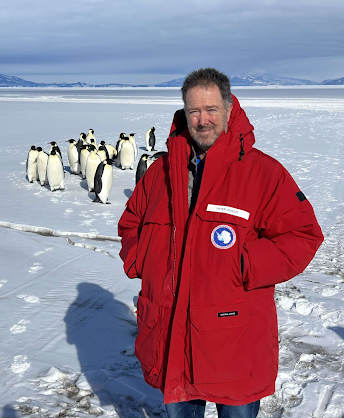
Doran is Professor of Geology and Geophysics and the John Franks Endowed Chair within the LSU College of Science.
At the heart of his research is a longstanding curiosity about how Earth's polar regions work and what they can tell us about our planet's past, its changing climate, and even the potential for life on other worlds.
Doran specializes in studying polar regions, especially Antarctic climate and ecosystems.
He has worked in some of the most remarkable and remote places on Earth, studying the physical, chemical, and biological processes that shape polar lakes, ice covers, and ecosystems across the Arctic and Antarctic.
His primary field site is Antarctica's McMurdo Dry Valleys, a vast, frozen landscape so cold and dry that only microbial life survives there. Lakes lie permanently sealed under thick ice covers, cut off from the atmosphere and, in some cases, from sunlight entirely.
Doran studies how these lakes work: how water moves through them, how carbon cycles within them, how they respond to climate, and what their ancient sediments reveal about environmental conditions stretching back thousands of years.
“I am deeply honored to be named a Fellow of the AAAS. As an organization committed to the broad promotion of science across all disciplines, it feels particularly meaningful to be recognized by a body that sees the full picture. Much of my career has been built on research that crosses boundaries between fields and does not always fit neatly within any single discipline's awards, so this recognition means a great deal. The AAAS commitment to science communication also resonates with me personally.”
— Peter Doran
Doran’s work in polar regions contributes to a broader scientific effort to understand past climate and to explore what extreme icy environments might tell us about the potential for life elsewhere in the solar system.
The dry valleys bear a striking resemblance to the surface of Mars, and, alongside many colleagues, Doran has worked to understand what they might teach us about where to look for life on other bodies in the solar system. Through NASA-funded research, including the collaborative Oceans Across Space and Time project, that work now extends to some of the saltiest and most inhospitable water on Earth, probing the outer boundaries of where life can survive.
Exploring other worlds also comes with a responsibility to do so carefully. Over the past decade or more, Doran has become involved in the international effort to ensure that space exploration is conducted in a way that protects both the environments we visit and our own. He now serves on the global panel that develops guidelines for the world's space agencies when exploring Mars and other potentially habitable worlds.
Both an Antarctic stream and glacier were named for Doran by the U.S. Geological Survey to commemorate his many significant research contributions conducted on the continent. Doran was elected as a Fellow of the Geological Society of America in 2018, and now as a AAAS Fellow for 2025.
Doran credits much of his success to the many outstanding colleagues and students he has worked with over the years. “I share this honor with them,” Doran said.
Bret Elderd
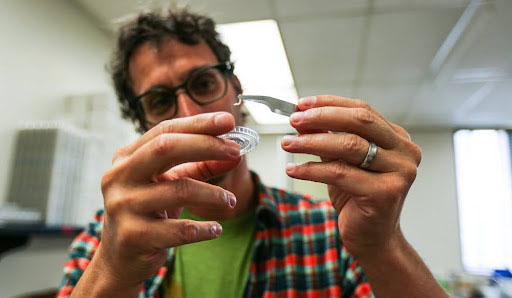
Elderd is the Dr. Ronald and Denise Alvarez Professor of Biological Sciences in the LSU College of Science.
A quantitative ecologist, his research focuses primarily on disease outbreaks and host-pathogen interactions, with other research avenues including community ecology and population dynamics.
By combining field-based experiments with mathematical models, Elderd has examined questions involving insect pest outbreaks, public health responses to disease outbreaks, and the long-term viability of plant and animal populations.
For example, Elderd’s research has examined how various factors, from the protective chemicals produced by plants to changes in temperature, can quicken or dampen the spread of disease in insects such as butterflies and moths.
He even found, in one study, that insects may engage in cannibalism to slow the spread of disease when their densities are high or times are tough. By studying these and other factors,
Elderd's work has informed disease outbreak forecasting and interventions.
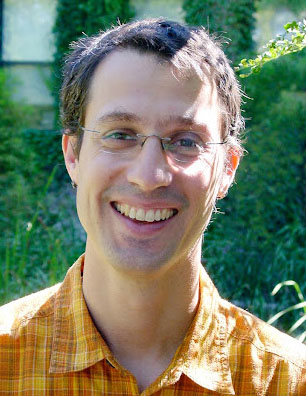
“I am truly honored (and thrilled) to be joining such an illustrious group of individuals whose contributions to science are monumental and innumerable.”
— Bret Elderd
Elderd is also an active member of globally distributed research projects tracking plant demography and herbivory patterns. His work has been published in a number of high-impact journals, including the Proceedings of the National Academy of Sciences, The American Naturalist, Ecology, and Evolution.
As an LSU faculty member, Elderd is a key member of the data science initiative to train undergraduate and graduate students to develop coding skills relevant to the biological sciences and ecology.
Lucio Miele
Dr. Miele is the Director of the LSU LCMC Health Cancer Center and Cancer Crusaders Professor of Genetics, Medicine/Oncology, and Public Health at LSU Health New Orleans.
A large part of Miele’s research is devoted to biomarker discovery and precision oncology, using integrative bioinformatics and human biospecimens to improve cancer care.
He has made major contributions to our understanding of the role of Notch signaling – which involves a cell-to-cell communication pathway that regulates the fate of cells – in cancer biology and immunology.
Miele completed his medical training in Naples, Italy, and earned his PhD at the Max-Planck Institute for Molecular Genetics in Berlin.
He went on to use innovative informatics approaches, as a fellow at the National Institute of Child Health and Human Development (NICHD), to predict the active site of secretoglobins, proteins that play a key role in immune control.
Then, at the Center for Biologics Evaluation and Research (CBER) at the FDA, he began his work on Notch genes in cancer and the immune system.
He also later served as co-chair of the NCI Cancer Therapy Evaluation Program task force on clinical trials targeting cancer stem cells.
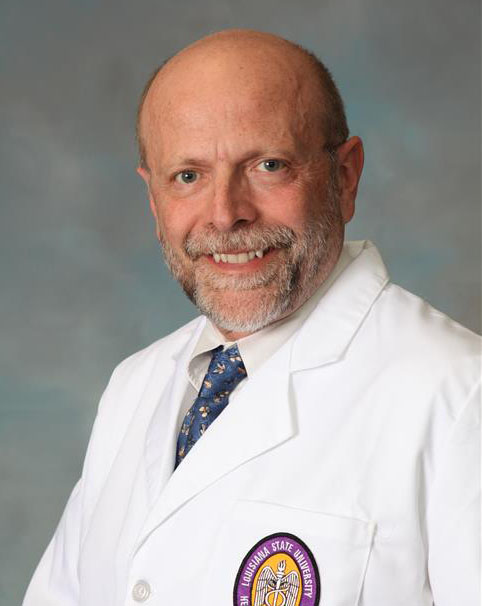
“I am deeply honored to be named a Fellow of the American Association for the Advancement of Science. This recognition reflects not only my own work, but the extraordinary colleagues, collaborators, and trainees who have contributed to advancing cancer experimental therapeutics and precision medicine. Our growing understanding of pathways such as Notch signaling and their role in breast cancer initiation and cancer immunity is the result of sustained, collective effort. I am grateful to be part of a scientific community committed to translating discovery into meaningful impact for patients.”
— Lucio Miele
At LSU Health New Orleans, Miele created the Precision Medicine Program, serving as the site PI for the Southern “All of Us” program, and received an NIH National Cancer Institute P20 grant in partnership with Moffitt Comprehensive Cancer Center to conduct breast cancer research. He also received a SPORE P20 to investigate the immunogenomic diversity of human triple-negative breast cancers.
Miele has authored 278 peer-reviewed publications to date. He has mentored 52 mentees to date, from undergraduate to junior faculty. As the KL2 co-director and, since 2024, K12 MPI for the CCTS, Dr. Miele mentors K-funded scholars involved in translational projects.
Miele also serves in the following capacities: Louisiana Clinical and Translational Sciences Center: Director of Biomedical Informatics; and University of Alabama Center for Clinical and Translational Science Partner Network: Associate Director and K12 Program Primary Investigator (PI). He is a member of the American Association for Cancer Research (AACR) Breast Cancer standing review panel, institutional PI for the AACR GENIE Consortium, and co-Chair of the Community Engagement Committee of the Nutrition for Precision Health Study. He is the LSU Health New Orleans PI for the National Patient-Centered Clinical Research Network New Orleans site (REACHNet), and serves on the National Advisory Committee of the Robert A. Winn Awards for Excellence in Clinical Research.
LSU's AAAS Fellows, as recognized by the affiliated Section Steering Committees:
- 1901: William Stubbs, Chemistry
- 1955: George Lowery, Zoological Sciences
- 1960: Arlo Landolt, Astronomy
- 1966: James Eldred, Geology and Geography
- 1971: Barbara Strawitz, Chemistry
- 1980: Neil Kestner, Chemistry
- 1980: William Pryor, Chemistry
- 1984: O. Carruth McGehee, Mathematics
- 1992: Christopher D’Elia, Atmospheric and Hydrospheric Sciences
- 1994: Charles Groat, Geology and Geography
- 1995: Steven C. Hand, Biological Sciences
- 1995: Nancy Rabalais, Biological Sciences
- 1998: Meredith Blackwell, Biological Sciences
- 1999: Dominique Homberger, Biological Sciences
- 2001: Brian Hales, Chemistry
- 2002: Isiah Warner, Chemistry
- 2003: Kent Mathewson, Geology and Geography
- 2006: Jorge Pullin, Physics
- 2007: Mark Batzer, Biological Sciences
- 2007: Joel Tohline, Astronomy
- 2008: Kam Biu Liu, Geology and Geography
- 2009: Terry Bricker, Biological Sciences
- 2009: Barry Dellinger, Chemistry
- 2009: Jonathan Dowling, Physics
- 2009: Brooks Ellwood, Geology and Geography
- 2009: Cynthia Peterson, Biological Sciences
- 2009: Steven Soper, Chemistry
- 2009: Kalliat Valsaraj, Engineering
- 2010: Robin McCarley, Chemistry
- 2010: Saundra McGuire, Chemistry
- 2010: Erwin Poliakoff, Chemistry
- 2011: Huiming Bao, Geology and Geography
- 2011: Gary Byerly, Geology and Geography
- 2011: Michael Khonsari, Engineering
- 2012: Susanne Brenner, Mathematics
- 2012: Rongying Jin, Physics
- 2012: Marcia Newcomer, Biological Sciences
- 2012: Kenneth Schafer, Physics
- 2013: John Fleeger, Biological Sciences
- 2013: Robert Lipton, Mathematics
- 2014: George Stanley, Chemistry
- 2014: Carol Wicks, Atmospheric and Hydrospheric Sciences
- 2018: Prosanta Chakrabarty, Biological Sciences
- 2018: Anne Grove, Biological Sciences
- 2018: Kyle Edward Harms, Biological Sciences
- 2018: Wayne Newhauser, Medical Sciences
- 2020: Robb Brumfield, Biological Sciences
- 2022: Zakiya S. Wilson-Kennedy, Chemistry
- 2022: Samuel J. Bentley, Geology and Geography
- 2023: Edward Laws, Biological Sciences
- 2023: Sophie Warny, Geology and Geography
- 2023: Joseph Giaime, Physics
- 2024: John A. Pojman, Chemistry
- 2024: Les Butler, Biological Sciences
- 2025: Bret Elderd, Biological Sciences
- 2025: Peter Doran, Geology and Geophysics
- 2025: Lucio Miele, LSU LCMC Health Cancer Center