
Support Physics & Astronomy
Private support has always provided the margin of excellence that empowers our students and faculty to achieve more. In today’s challenging economic climate, LSU relies even more on the generosity of alumni and friends who invest in the future. Gifts to the Department of Physics and Astronomy help strengthen our teaching programs and advance the scientific discoveries that shape our world. With your support, we can continue to make a meaningful and lasting impact on our students, our community, and beyond.
Give Online
How to Donate
- Click the link to Give Online.
- Under the Designation(s) section, type "Physics and Astronomy Development Fund" or
type in any of the particular Physics & Astronomy accounts to which your donation
should be directed.
Funds & Endowments
The Department of Physics and Astronomy participates in several memorial funds and endowments that support the educational process by supporting quality students, distinguished faculty, and educational/research facilities.
Contributions have been made to the LSU Foundation to establish a fellowship fund in the memory of Boyd Professor Joseph Callaway to assist graduate students majoring in physics or astronomy at Louisiana State University and Agricultural and Mechanical College. The recipient of this fellowship must be a full-time graduate student at the University enrolled and in good standing in the Graduate School majoring in physics or astronomy. Contributions to this fund may be made to the LSU Foundation at 3796 Nicholson Dr, Baton Rouge, Louisiana.
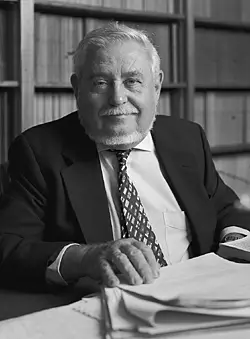 In Commemoration of Boyd Professor Joseph Callaway
July 1, 1931 - June 17, 1994
Given the recent, untimely death of Joe Callaway, his contributions to and place in this department over the past twenty-five years deserve special notice.
In research, Joe Callaway was identified with two areas, one the calculation of band structures in solid state physics and, second, the detailed calculations of electron-hydrogen atom scattering in atomic physics.
He was one of the early pioneers to follow the work of Wigner, Seitz and Slater, and convert that work into elaborate numerical calculations of band structures. In recent years, magnetic materials such as nickel, small clusters, and high-temperature superconducting materials were his particular interest. Starting in the 1960's, the density functional method became a key component of this work. Besides adapting it for computational applications, he also contributed to its formalism, particularly in extensions to relativistic effects. The Hubbard model was another of his major attentions.
In the problem of electron-hydrogen scattering, he was known for some of the most detailed and accurate numerical computations of cross-sections in the intermediate energy range which is rich in resonances in this system. Kohn variational calculations and the use of pseudostates were particular characteristics of his work. In a long and fruitful collaboration with Jim Williams (Perth), who produced some of the best experimental data for low and intermediate energies, this work was extremely influential in the field.
During the course of these research activities, Joe trained and worked with a long string of graduate students and postdoctoral associates. During his years here, 29 students obtained their Ph.D. degrees under his supervision. His group was always one of the largest in this regard in the department's graduate education.
Besides these aspects of research and graduate education, Joe was also a major figure in many other ways in shaping this department. He served as Chairman from 1970 to 1973, years in which the department expanded significantly in the number of faculty. Many of the current senior faculty were hired in those years and the major role he played in that, as well as in setting the tone and emphasis on research, changed the complexion of this department. One could fairly conclude that Joe Callaway is the one person who shaped the department most in terms of what it is today.
As one who was always actively engaged and (loudly) heard in committees, departmental and university-wide, Joe's voice although now stilled, will continue to echo in this department.
Graduate students majoring in physics or astronomy at Louisiana State University and Agricultural and Mechanical College. The recipient of this fellowship must be a full-time graduate student at the University, enrolled and in good standing in the Graduate School, majoring in physics or astronomy. Contributions to this fund may be made to the LSU Foundation at 3796 Nicholson Dr, Baton Rouge, Louisiana.
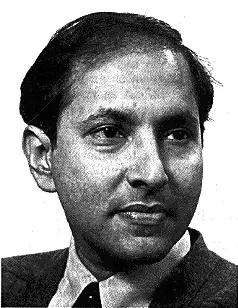 In Commemoration of Professor Ganesar Chanmugam
October 24, 1939 - March 25, 1996
Ganesar Chanmugam, a professor in the Department of Physics and Astronomy at Louisiana State University for 25 years and an internationally recognized expert on the physics of degenerate stars, died on March 25, 1996 in Houston, Texas.
Ganesh was born in Colombo, Ceylon (now Sri Lanka), on October 24, 1939. He received two undergraduate degrees in mathematics, both with honors: one from what is now the University of Colombo in 1961, and the other from the University of Cambridge in 1963.
After a year spent teaching at the University of Massachusetts in Amherst, he went to Brandeis University for graduate studies. From the beginning of his career, Ganesh focused his mathematical skills and physical insight on many of the astrophysical problems associated with white dwarfs and neutron stars. His Ph.D. thesis concerned the effects of three-body forces on the nuclear equation of state. He also published work with his thesis supervisor, Sylvan Schweber, on the role of electromagnetic many-body forces in dense matter.
Upon completing his Ph.D. degree in 1970, he joined the Department of Physics and Astronomy at Louisiana State University, where he remained for the rest of his career. For the next two and a half decades, a steady stream of insightful papers about degenerate stars were published by Ganesh and various colleagues with whom he often collaborated during summers and leaves of absence at universities and research institutions around the world. Though he would often return to questions concerning the structure of neutron stars, his attention was most steadfastly focused on the magnetic and radiative properties of neutron stars and white dwarfs. It was here that Ganesh made his broadest range of contributions to modern theoretical astrophysics.
Dr. and Mrs. Max Goodrich established the Distinguished Lectureship Series for the Department of Physics and Astronomy through an initial gift in 1982. The purpose is to bring a distinguished physicist to LSU for a three-day period on an annual or biannual schedule. The physicist would talk with faculty and graduate students, give a public lecture, and perhaps give a research seminar.
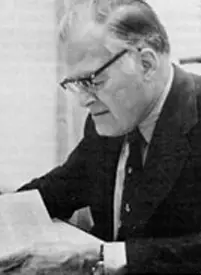 In Commemoration of Max Goodrich
1905 - 1999
circa 1927, B.S. in Mathematics, Westminster College, Fulton, Missouri
1935, Ph.D. in Physics, University of Minnesota
The following tribute to Max Goodrich was written by Professor A.R.P. Rau1 and read to the audience attending the March, 1989 lecture presented by Professor Maarten Schmidt in connection with the Max Goodrich Distinguished Lectureship Series.
Max Goodrich was born in 1905 and grew up in rural western Missouri, his education spanning the range from one-room schoolhouses to a baccalaureate degree from Westminster College. After teaching in high school for a while, he went to the University of Minnesota for graduate study in physics under Professor John Tate, a noted physicist at that time and then editor ofPhysical Review. Theirs was one of the most prominent groups in experimental studies of low energy electron impact phenomena. Unaware of this, I still recall the nice feelings evoked inside me when some years ago in the course of some work of mine on electron-hydrogen collisions, I came across a 1937 paper of his (Phys. Rev. 52, 259) on this subject and then found that it is the same Max Goodrich to whom I now have a connection through the LSU Department of Physics and Astronomy.
From Minnesota, Max Goodrich came to LSU in 1937. It was a very different LSU and a very different physics department from now. With only four faculty in the department and no tradition of research, it was left to him and some of his colleagues to develop that culture of research here. In a year spent at Oak Ridge National Laboratory after WWII, Max Goodrich got into scintillation spectrometry of radioactive rays, and back in LSU, established a laboratory in this area, remaining active until after he became Dean of LSU's Graduate School in 1961.
After that, administrative tasks increasingly took up his time but here again he had a significant achievement. He played a key role in bringing to LSU in 1965 a large National Science Foundation Development Grant which changed the complexion of the mathematics and physical science departments here. He served as Dean of the Graduate School until his retirement in 1973, taking a year off in between to go to the U.S. Office of Education in Washington, D.C. as Chief of their Graduate Academic Program. After his retirement, Max Goodrich has kept his close contacts with LSU, particularly through the Friends of the LSU Library and the Museum of Natural Science, and now also through this annual lectureship series which bears his name. We are very happy to have him with us at these events and it is a pity that he was unable to come today.
A.R.P. Rau, Professor
LSU Department of Physics and Astronomy
March 1, 1989
1In putting this tribute together, Ravi had access to "A Brief Resume" that Max Goodrich had typed himself, signed and presented to Jerry Draayer (Chairman of the Department of Physics and Astronomy) in December, 1985. As of March, 1998, the department still has in its files a copy of this brief resume. (J.E.T.)
The estate of Louisiana State University Alumnus, Horace C. Hearne, Jr., has provided funds for two endowed Chairs in the Department of Physics and Astronomy.
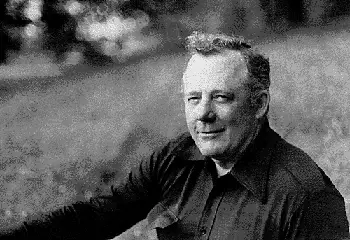 In Commemoration of Horace C. Hearne, Jr.
Deceased June 1994
Originally from Shreveport, Horace C. Hearne, Jr., graduated from LSU with a B.S. in physics in 1951 and received a master's degree in mathematics from Massachusetts Institute of Technology.
His career included analytical work for several branches of the U.S. military and DuPont du Canada. He served as a civilian consultant to the Diem government in South Vietnam and was recognized by President Diem for his efforts.
Hearne later lived many years in Shawnee Mission, Kansas, where he owned and operated several manufacturing enterprises. In 1993, he contacted the LSU Foundation and the Department of Physics and Astronomy about an estate gift, which he arranged through a trust. He died in Shreveport in June 1994.
Hearne's investment portfolio in his trust resulted in a $1,281,790 transfer to the LSU Foundation in the summer of 1996. The terms of the gift called for the endowment of several chairs and professorships in a new Horace C. Hearne, Jr. Institute for Theoretical Physics.
The funds have been applied to two endowed chairs, which have qualified for an additional $800,000 in matching grants from the Louisiana Board of Regents Educational Quality Support Fund (LEQSF). With the state's matching funds, the two endowments total $2 million.
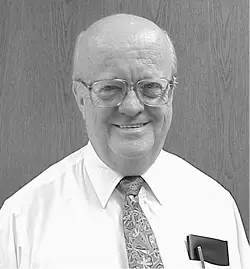 The R. Greg Hussey Scholarship in the Department of Physics and Astronomy will be
awarded annually to a student who is showing exceptional promise both in the classroom
and in research. The fellowship is made possible by a donation from Professor Greg
Hussey, member of the Department faculty for 43 years who retired in 2000. He was
also Associate Dean of the College of Basic Sciences from 1971 to 2000.
The R. Greg Hussey Scholarship in the Department of Physics and Astronomy will be
awarded annually to a student who is showing exceptional promise both in the classroom
and in research. The fellowship is made possible by a donation from Professor Greg
Hussey, member of the Department faculty for 43 years who retired in 2000. He was
also Associate Dean of the College of Basic Sciences from 1971 to 2000.
The scholarship consists of a scholarship of $500. The requirements are (1) He or she should be a full-time undergraduate student with a GPA of at least 3.0; (2) The student should be admitted to the College of Basic Sciences, majoring in the Department of Physics and Astronomy; (3) The student should be participating in research under the supervision of a LSU faculty member whose primary academic appointment is in the Department of Physics and Astronomy
The recipient of the scholarship will be referred to as a Greg Hussey Undergraduate Scholar in Physics and Astronomy. The scholarship award will be for one year. However, the recipient is eligible to receive the award more than once.
Applications for the Scholarship consist of an official copy of the student's LSU transcript and a nomination letter from the faculty member supervising the student's work.
BREC-LSU-BRAS Highland Road Park Observatory
In 1988, Louisiana State University and Agricultural and Mechanical College entered into a cooperative agreement with the Houston Museum of Natural Science, a private non-profit organization incorporated in the State of Texas. This endeavor provided LSU with a $150,000 endowment fund in exchange for the transfer of the 36" Tinsley telescope and associated equipment to the Houston Museum. LSU would have continued availability of the use of the telescope. This endowment is to be used by the Department of Physics and Astronomy for the acquisition of materials, supplies, services and equipment directly related to the study of Physics and Astronomy.
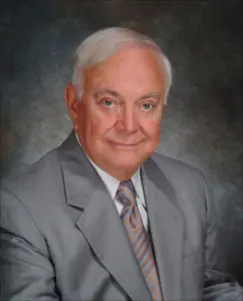 The Dr. Charles M. Smith Chair of Medical Physics was created in 2006 through the
generosity of a gift from LSU alumnus, Dr. Charles M. Smith. Dr. Smith graduated from
LSU in 1951 and from the LSU Medical School in New Orleans in 1955. He practiced family
medicine for 35 years in Sulphur, Louisiana. Dr. Smith’s passion for quality patient
care and his strong desire to make an impact on cancer treatment in Louisiana led
him to support the Medical Physics Program.
The Dr. Charles M. Smith Chair of Medical Physics was created in 2006 through the
generosity of a gift from LSU alumnus, Dr. Charles M. Smith. Dr. Smith graduated from
LSU in 1951 and from the LSU Medical School in New Orleans in 1955. He practiced family
medicine for 35 years in Sulphur, Louisiana. Dr. Smith’s passion for quality patient
care and his strong desire to make an impact on cancer treatment in Louisiana led
him to support the Medical Physics Program.
Dr. Smith’s contribution was matched by funds raised through the 2004 Mary Bird Perkins capital campaign. In 2007, the Smith Chair received additional funding from the Louisiana Board of Regents Support Fund. This endowment provides funds annually that are used to support graduate student research, to seed new research directions, and for other Program needs.
In 2007, Professor Kenneth R. Hogstrom was the inaugural recipient of the Smith Chair. The Smith Chair is currently held by Dr. Wayne Newhauser, Professor and Director of the Medical Physics Program.
Established in honor of his outstanding research, scholarship, and mentorship of graduate students, the Kenneth R. Hogstrom Superior Graduate Student Scholarship will support medical physics graduate students participating in clinical research on radiation oncology at Mary Bird Perkins Cancer Center.