
Research Areas
Research that Explains and Predicts How Nature Works
Our research spans condensed matter, quantum information science and quantum materials, atomic, nuclear and particle physics, gravitational physics and cosmology, astronomy, astrophysics, and medical and health physics. Using advanced theory, computation, and instrumentation, faculty and students work together to understand the Universe and develop technologies that benefit society.
Observational Astronomy and Astrophysics
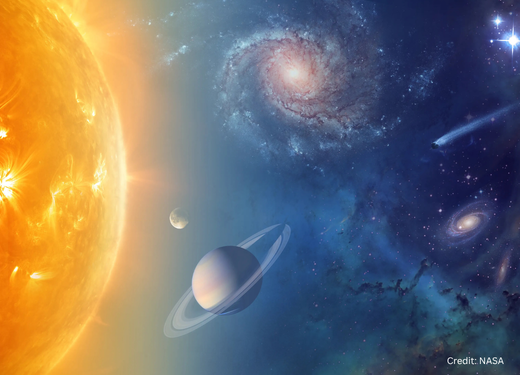
The observational astrophysics group uses a variety of techniques and observational facilities to study stars, exoplanets, and stellar remnants like neutron stars and black holes. Exoplanet research focuses on their demographics and the connections between planets, their host stars, and the stellar populations they belong to. The study of compact objects focuses on multi-wavelength observations of accretion disks. We use and collect data from NASA’s Hubble, JWST, Chandra, and Roman space telescopes among others, as well as from large ground-based telescopes including the Vera Rubin Observatory, Gemini, and the CHARA interferometer. We are significantly invested in the design of future space and balloon missions, including the Habitable Worlds Observatory, LUSTER, and SAKHMET. Please see the Observational Astronomy & Astrophysics research page for more information.
Faculty Members:
- Boyajian
Fundamental properties of stars; exoplanet detection and characterization - Hinkel
Exoplanets and their parent stars, Hypatia Catalog, stellar elemental abundances, exoplanet interiors and mineralogy, M-dwarfs - Hynes
Multi-wavelength observations of Black Holes and Neutron Stars - Penny
Exoplanets, Gravitational Microlensing - Clayton (Emeritus)
Dust everywhere, R CrB stars - Schaefer (Emeritus)
Gamma-ray bursts, supernovae, novae, Kuiper Belt Objects, sunspots, history of astronomy
High-Energy Astrophysics
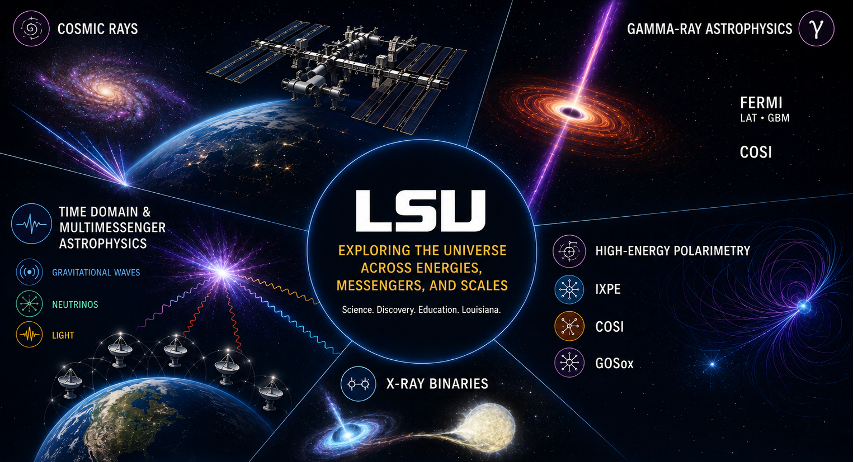 The High-Energy Astrophysics group studies the most energetic phenomena in the universe
and the extreme sources that produce them, like magnetars, core-collapse Supernovae
and neutron star mergers, active galactic nuclei and X-ray binaries. With the CALET
detector aboard the International Space Station since 2015, the group has logged over
4 billion cosmic-ray events while searching for signatures of dark matter and nearby
supernova remnants and monitoring solar activity in Earth orbit. The group contributes
to Fermi's LAT and GBM instruments and plays a key role in COSI, a nuclear spectrometer
probing the largely unexplored MeV sky. The group includes the leads of the Interplanetary
Network (IPN) for localizing transient sources, connects gamma-ray bursts and other
transients across gravitational waves, neutrinos, and light, and is central to upcoming
missions like StarBurst (2026). Through IXPE, COSI, and GOSoX, the group's high-energy
polarimetry efforts reveal the magnetic fields and geometry of black holes, neutron
stars, binary systems, relativistic jets across X-ray and gamma-ray wavelengths. With
the Rubin, Roman, and James Webb observatories the group studies the behavior of high-energy
objects at optical and infrared wavelengths. For more information, follow the links
below to the individual faculty webpages or visit the High-Energy Astrophysics research webpage.
The High-Energy Astrophysics group studies the most energetic phenomena in the universe
and the extreme sources that produce them, like magnetars, core-collapse Supernovae
and neutron star mergers, active galactic nuclei and X-ray binaries. With the CALET
detector aboard the International Space Station since 2015, the group has logged over
4 billion cosmic-ray events while searching for signatures of dark matter and nearby
supernova remnants and monitoring solar activity in Earth orbit. The group contributes
to Fermi's LAT and GBM instruments and plays a key role in COSI, a nuclear spectrometer
probing the largely unexplored MeV sky. The group includes the leads of the Interplanetary
Network (IPN) for localizing transient sources, connects gamma-ray bursts and other
transients across gravitational waves, neutrinos, and light, and is central to upcoming
missions like StarBurst (2026). Through IXPE, COSI, and GOSoX, the group's high-energy
polarimetry efforts reveal the magnetic fields and geometry of black holes, neutron
stars, binary systems, relativistic jets across X-ray and gamma-ray wavelengths. With
the Rubin, Roman, and James Webb observatories the group studies the behavior of high-energy
objects at optical and infrared wavelengths. For more information, follow the links
below to the individual faculty webpages or visit the High-Energy Astrophysics research webpage.
Faculty Members:
- Burns
Time-domain and Multimessenger Astronomy: InterPlanetary Network, Fermi-GBM, COSI, StarBurst - Cherry (Emeritus)
Hard X-ray/gamma-ray astronomy, terrestrial gamma flashes, cosmic rays: CALET, APT - Hynes
Multi-wavelength observations of Black Holes and Neutron Stars - Negro
High-energy astrophysics and Multimessenger Astronomy: Fermi-LAT, COSI, IXPE, CALET, future missions development
Theoretical Astrophysics
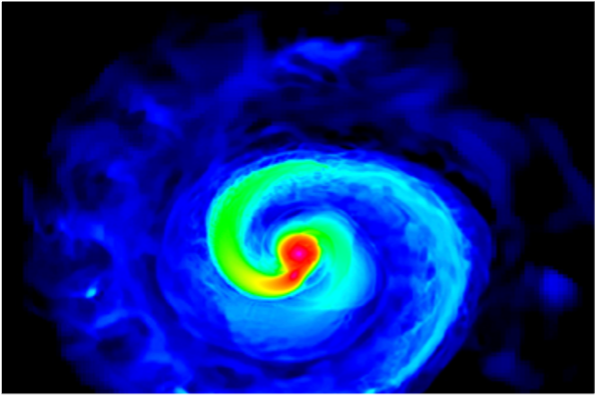 The focal points for the theoretical astrophysics group are the hydrodynamics of binary
and single stars, compact objects (black holes, neutron stars, and white dwarfs) and
their accretion disks at violent and dynamical phases of their evolution (tidal disruptions,
mergers, flares, star formation, and supernova explosions). Typical goals of our research
include understanding the main physical processes taking place during these events
and the calculation of observable outcomes such as multi-wavelength light curves from
a variety of energy generation mechanisms, nuclear reactions and chemical abundances,
and gravitational wave signatures of potential sources for LIGO and LISA. The hydrodynamics is run using local supercomputers such as SuperMIKE-II, and other
machines available through LONI and XSEDE. For more information, follow the links below to the individual faculty webpages.
The focal points for the theoretical astrophysics group are the hydrodynamics of binary
and single stars, compact objects (black holes, neutron stars, and white dwarfs) and
their accretion disks at violent and dynamical phases of their evolution (tidal disruptions,
mergers, flares, star formation, and supernova explosions). Typical goals of our research
include understanding the main physical processes taking place during these events
and the calculation of observable outcomes such as multi-wavelength light curves from
a variety of energy generation mechanisms, nuclear reactions and chemical abundances,
and gravitational wave signatures of potential sources for LIGO and LISA. The hydrodynamics is run using local supercomputers such as SuperMIKE-II, and other
machines available through LONI and XSEDE. For more information, follow the links below to the individual faculty webpages.
Faculty Members:
- Chatzopoulos
Supernovae, stellar evolution, computational astrophysics - Frank (Emeritus)
Accretion, binary stars, binary evolution, mergers - Tohline (Emeritus)
Star formation, hydrodynamics of gravity wave sources
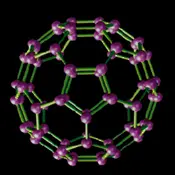 The Atomic, Molecular, and Optical (AMO) Physics research area investigates the fundamental
interactions between light and matter through both theoretical and experimental approaches.
Research spans ultrafast science, quantum optics, quantum information science, and
quantum photonics, exploring phenomena from electron dynamics on attosecond timescales
to quantum entanglement and the manipulation of quantum states of light.
The Atomic, Molecular, and Optical (AMO) Physics research area investigates the fundamental
interactions between light and matter through both theoretical and experimental approaches.
Research spans ultrafast science, quantum optics, quantum information science, and
quantum photonics, exploring phenomena from electron dynamics on attosecond timescales
to quantum entanglement and the manipulation of quantum states of light.
Faculty Members:
- Gaarde
Ultrafast Atomic, Molecular, and Optical Science - Lee
Quantum Optics and Quantum Information Science - Magana-Loaiza
Experimental Quantum Photonics - Mauger
Ultrafast Atomic, Molecular, and Optical Science - Rau
Quantum Optics and Quantum Information Science - Schafer
Ultrafast Atomic, Molecular, and Optical Science - Schrade
Quantum Information Science
Ultrafast Atomic, Molecular, and Optical Science
Gaarde, Mauger, and Schafer work on the interactions between ultrafast light pulses and atoms, molecules, and
solids including strong-field ionization, high harmonic generation, and ultrafast
transient absorption. The group also studies how electrons move inside molecules at
the fastest time scales, charge migration, and avenues by which these motions can
be measured in labs using ultrashort light sources. Charge migration investigations
are done in close collaboration with the Lopata group in the Department of Chemistry.
Light sources of interest range from intense femtosecond infrared pulses to attosecond
XUV and X-RAY sources. This group has strong ties to several experimental program
in the United States and in Europe. Working with faculty members in this group are
undergraduate and graduate students, and postdoctoral associates.
Quantum Optics and Quantum Information Science
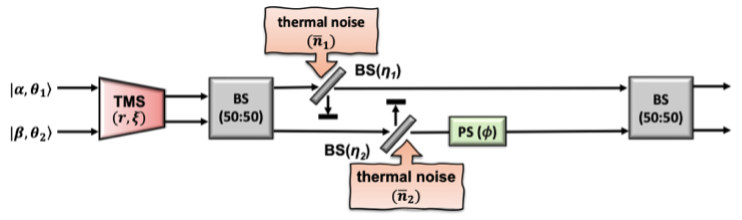
Lee studies quantum optical interferometry for precision measurement and development
of quantum information processing protocols. The latter includes reliable entanglement
distribution for long-distance quantum communication using quantum repeaters, enhanced
quantum memories using dynamical decoupling, and efficient single-photon sources/detectors.
Rau's primary research interests are in atomic physics, three-body quantum systems, mathematical
techniques such as variational principles and integration of time-dependent operator
equations, and quantum information. The last area is mainly the one of current research,
especially the role of symmetries and their groups for few qubit and qudit problems,
including entanglement, discord and other quantum correlations, their decay and possible
remediation.
Experimental Quantum Photonics

A metallic nanostructure hosts plasmonic waves produced by vacuum fluctuations of the electromagnetic field. The illustration also depicts the scattering of surface plasmons, which produces multiparticle systems with either bosonic or fermionic coherence properties. (Photo credit: LSU Quantum Photonics Group)
The Experimental Quantum Photonics Group at Louisiana State University conducts research at the intersection of quantum optics, photonics, and nanophotonics, with the goal of uncovering new physical phenomena and developing next-generation quantum technologies. Our work combines fundamental studies of the quantum nature of light with the design of practical approaches for quantum sensing, imaging, metrology, and information processing. Our research focuses on understanding and controlling multiparticle quantum systems, engineering novel states of light, and exploiting quantum correlations to surpass the limits of classical optical technologies. By integrating concepts from quantum optics, plasmonics, and photonic networks, we investigate new mechanisms for manipulating light at the quantum level and translating these discoveries into robust, scalable platforms for emerging quantum technologies.
The Condensed Matter and Materials Science area explores the fundamental properties of matter and develops new materials with unique electronic, magnetic, optical, and quantum characteristics. Through a close integration of experimental and theoretical research, faculty and students investigate how the structure and interactions of materials at the atomic and nanoscale levels give rise to novel physical phenomena and potential technological applications.
Condensed Matter - Materials Science (Experimental)
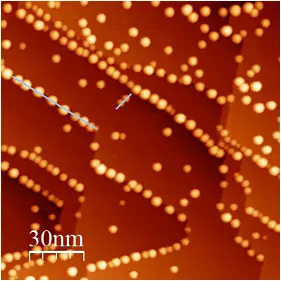
The condensed matter/material science physics group synthesizes, characterizes, and investigates a wide variety of materials in bulk crystals, thin films, and nanoscale structures. Experimental research in the properties of superconductors, magnetic materials, heavy fermion systems, intermetalics, reduced dimensionality systems, and other new compounds is carried out both using the state of the art in-house facilities, and in collaboration with national laboratories and institutes. Our faculty take advantage of the LSU's own synchrotron light source at Louisiana Light Source (LLS). For more information, follow the links below to the individual faculty webpages.
Experimental Faculty:
Condensed Matter Theory
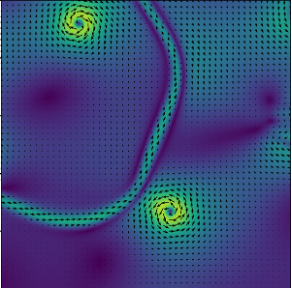
Late-stage numerical simulation of a temperature quench through the transition to a chiral p-wave superfluid showing two time-reversed chiral domains, vortices, anti-vortices and chiral edge currents confined on the domain wall. Photo credit: Phys. Rev. B (2025).
Theoretical research in condensed matter and materials physics at LSU covers a wide variety of quantum systems from cold atomic gases, quantum liquids and quantum solids - the superfluid phases of 3He and 4He, unconventional and high Tc superconductors, strongly correlated electronic systems such as heavy fermion metals and superconductors, computational materials theory for bulk and interface materials science, to topological insulators, semimetals and superconductors. LSU theorists also work across traditional discipline boundaries, from quantum optics and quantum circuits for quantum computing, to design and analysis of quantum systems for detection of rare events in QED and high energy astrophysics - the search for dark matter - to laboratory analogs for gravitational physics and cosmological phase transitions. For more information, follow the links below to the individual faculty webpages.
Theoretical Faculty:
The Experimental and Theoretical General Relativity program at LSU explores gravity across its full modern range, from quantum spacetime and the origin of the universe to black holes, compact binaries, and gravitational waves. By bringing together experiment, observation, analytical theory, and large scale computation, the program reflects one of LSU’s distinctive research strengths: deep expertise in gravitational wave science alongside internationally recognized work in general relativity, cosmology, numerical relativity, and quantum gravity.
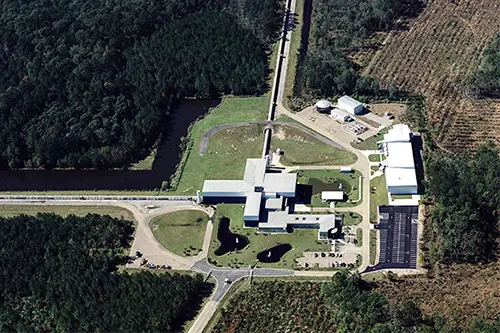
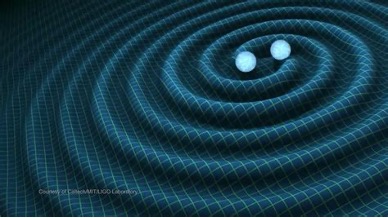
The experimental activities are focused on the search for the first direct detection of gravitational waves, and on the development of the new field of gravitational wave astronomy. LSU has been for decades a very significant contributor to the search for gravitational waves, operating until recently ALLEGRO, the only "resonant bar detector" in the US. Currently, the LSU experimental gravity group is dedicated to the search of gravitational waves with the LIGO interferometric detectors. The LIGO Laboratory operates two Observatories, one in Livingston, LA and another in Hanford, WA. The LIGO Livingston Observatory (LLO) and the LIGO Science Education Center are only 45 minutes away from LSU campus, and the LSU group faculty, students and postdocs are all frequent visitors and participate of the many scientific and outreach activities happening at LLO. LSU is a very active member institution of the LIGO Scientific Collaboration (LSC), with Prof Giaime being the Head of the LIGO Livingston Observatory and Prof Gonzalez having been elected the LSC spokesperson in 2011. For more information, follow the links below to the individual faculty webpages.
Faculty Members:
On the theoretical side, quantum gravity and quantum cosmology are among LSU’s most distinctive areas of strength, with faculty advancing canonical and loop-based approaches while connecting them to black holes, cosmology, quantum field theory in curved spacetime, and potential observational signatures. A central focus is how quantum geometry may resolve classical singularities and clarify physics near the Planck scale, including whether the big bang is replaced by a quantum bounce and whether such effects leave observable imprints in the early universe, such as in the cosmic microwave background. LSU also has longstanding strengths in numerical and analytical general relativity, including large-scale simulations of Einstein’s equations, black hole dynamics, compact-object mergers, waveform modeling, and computational methods using parallel supercomputers, adaptive mesh refinement, and multipatch techniques. The broader theoretical program addresses foundational questions in gravitation, including black hole physics, spin, entropy, and the mathematical structure of general relativity. Together, these efforts establish a broad theoretical program linking quantum gravity, black holes, cosmology, and the limits of classical spacetime. For more information, visit the individual faculty webpages.
Faculty Members:
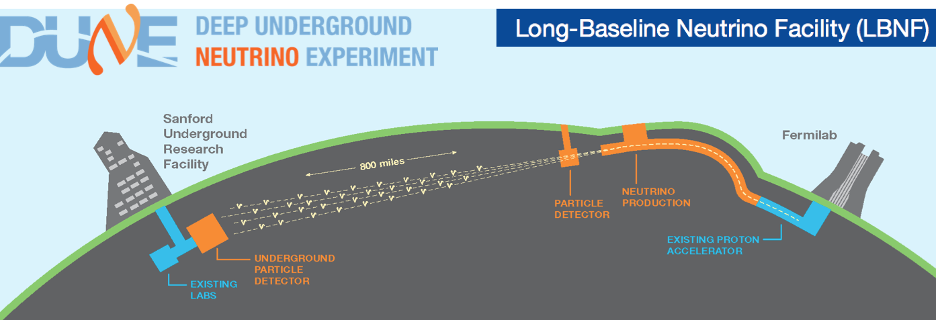
The high-energy physics group focuses on two areas of research, neutrino physics and the highest energy cosmic rays. Our research is addressing very exciting puzzles that nature has to offer. Despite the fact that neutrinos are some of the most abundant particles in the Universe they are difficult to detect. We require very large and sophisticated detectors to observe and study them. Our detectors are located in underground laboratories to shield against cosmic rays and related particles which could create undesirable signals inside the detector. The highest energy cosmic rays are particles arriving on Earth with energies many orders of magnitude larger than what could be accomplished with man-made particle accelerators. The composition of these highest energy cosmic particles and their origins are an active area of our studies. We are involved in several experimental projects to collect data on neutrinos and the highest energy cosmic rays in order to solve the mysteries associated with these particles. For more information, follow the links below to the individual faculty webpages.
Faculty Members:
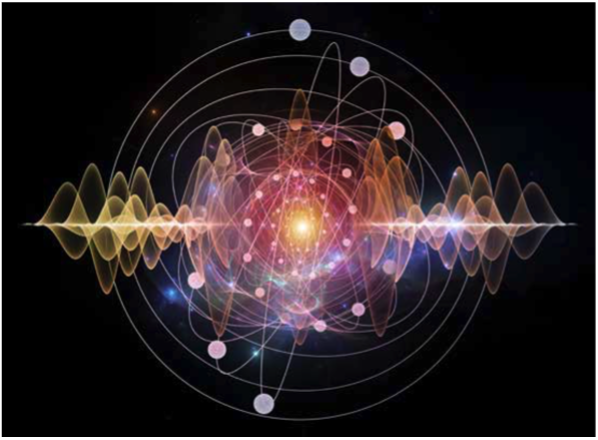 The Nuclear Physics group studies the structure of atomic nuclei and their reactions.
Nuclear reactions power the stars and play key role in the evolution of matter throughout
the Universe. The program addresses fundamental questions about nuclei far from stability,
the forces and symmetries that govern nuclear matter, the origin of the elements,
and the connections between nuclear physics, particle physics, astrophysics, and cosmology.
Experimental faculty members are users of two major nuclear research facilities, the
Holifield Radioactive Beam Facility at Oak Ridge National Laboratory and the Isotope Separator and Accelerator at TRIUMF. The nuclear theory group provides some of the most accurate modeling of nuclei through
ab initio simulations performed on the Frontera and NERSC petascale supercomputer
systems, and designs novel quantum algorithms for nuclei, utilizing LSU’s Quantum
Photonics Lab and the IBM Quantum Computer.
The Nuclear Physics group studies the structure of atomic nuclei and their reactions.
Nuclear reactions power the stars and play key role in the evolution of matter throughout
the Universe. The program addresses fundamental questions about nuclei far from stability,
the forces and symmetries that govern nuclear matter, the origin of the elements,
and the connections between nuclear physics, particle physics, astrophysics, and cosmology.
Experimental faculty members are users of two major nuclear research facilities, the
Holifield Radioactive Beam Facility at Oak Ridge National Laboratory and the Isotope Separator and Accelerator at TRIUMF. The nuclear theory group provides some of the most accurate modeling of nuclei through
ab initio simulations performed on the Frontera and NERSC petascale supercomputer
systems, and designs novel quantum algorithms for nuclei, utilizing LSU’s Quantum
Photonics Lab and the IBM Quantum Computer.
Faculty Members:
- Blackmon
Experimental nuclear physics - Deibel
Experimental nuclear physics - Draayer
Symmetry-based approaches, high performance computing - Launey
Nuclear structure and reactions, computational physics, quantum computing - Marley
Experimental nuclear physics - Mercenne
Nuclear structure and reactions, high performance computing & quantum computing