
High-Energy Astrophysics
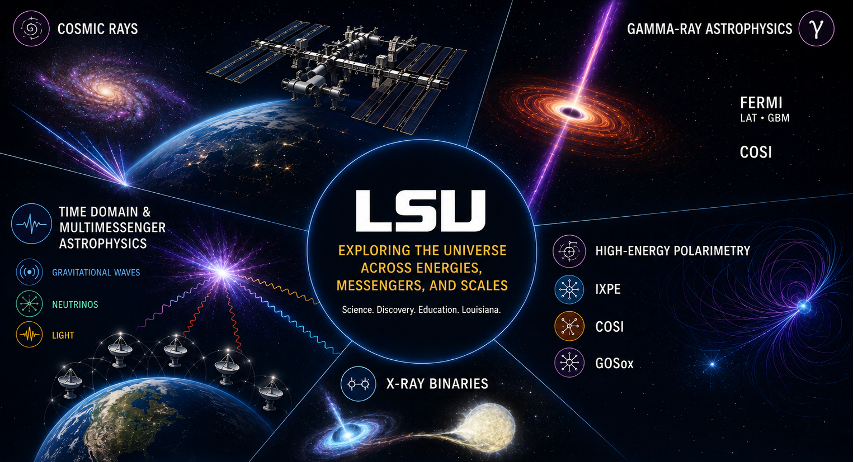
High-Energy Astrophysics is the study of the highest energy radiation coming from the Universe - X-rays, gamma-rays, and cosmic rays and their sources. The breadth of interests of our group encompasses different but synergistic topics: cosmic rays, time-domain and multimessenger astronomy, gamma-ray astronomy, high-energy polarimetry, space weather and terrestrial gamma-ray flashes, instrument development, and student training.
Faculty
| Faculty | Science | Involvement |
|---|---|---|
| Burns | Time-domain and Multimessenger Astronomy | InterPlanetary Network, Fermi-GBM, COSI, Starburst |
| Cherry | Hard X-ray/gamma-ray astronomy, terrestrial gamma flashes, cosmic rays | CALET, APT |
| Hynes | Multi-wavelength observations of Black Holes and Neutron Stars | |
| Negro | High-energy astrophysics and Multimessenger Astronomy | Fermi-LAT, COSI, IXPE, CALET, future missions development) |
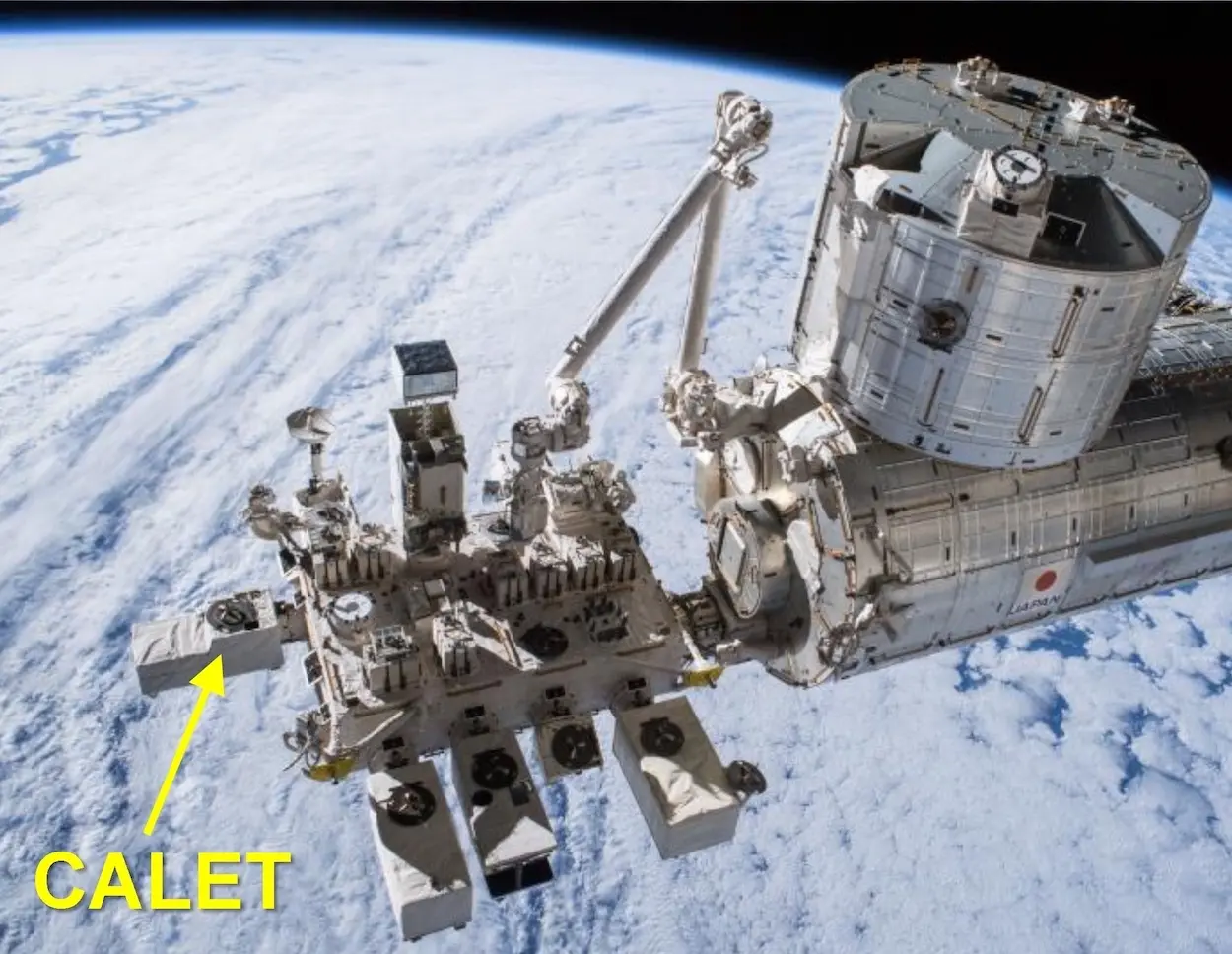
The CALorimetric Electron Telescope (CALET) has been collecting cosmic ray and gamma-ray data on the JEM-EF external platform of the International Space Station since mid-October 2015. As of January 2024, more than 4 billion triggered events > 1 GeV and > 1.9 billion events > 10 GeV have been accumulated with a live time fraction of 86%. The main CALET detector consists of a deep (30 radiation lengths) calorimeter designed to measure the cosmic ray electron spectrum up to 20 TeV (2 × 10^13 eV), where features in the spectrum may indicate the presence of nearby sources or dark matter. As of 2024, the high energy electron spectrum is showing initial indications of nearby sources (e.g., supernova remnants including Vela, the Cygnus Loop, and Monogem). In addition to its primary goal to explore the high energy electron spectrum, CALET can study the cosmic ray hadronic sector by contributing high precision measurements of the energy spectra, relative abundances, and secondary-to-primary ratios of elements from hydrogen to iron. Deviations from a simple power law, as reported by CREAM, PAMELA, and AMS-02 in the spectra of light nuclei, are under study from a few tens of GeV to the multi-TeV region. As an example, a flattening observed in the boron-to-carbon ratio near 1 TeV suggests that the hardening of the ratio could be due to extra material traversed near the source, producing an excess of secondary boron very early in propagation. Finally, CALET is observing X-rays and gamma rays from 7 keV to 10 MeV and 1 GeV up to 10 TeV, providing a capability for high energy counterpart searches for gamma ray bursts in coincidence with LIGO/Virgo gravitational wave events.
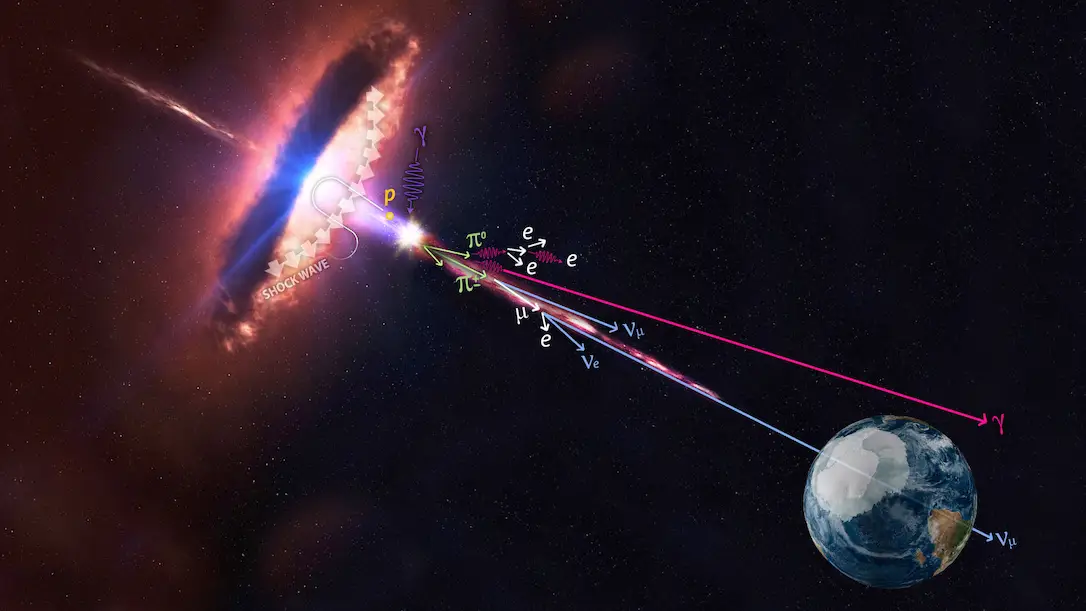 Time-domain astronomy investigates dynamic celestial phenomena, including gamma-ray
bursts (GRBs), intense flashes of gamma rays revealing high-energy processes. Multi-messenger
astronomy combines high-energy sources with high-energy neutrinos and gravitational
waves, offering diverse insights into cosmic events. At LSU we work with experts of
gravitational wave detection at LIGO-Livingston facility. Scientists at LSU co-lead
the Interplanetary Network which contributes by localizing transient events, enhancing
our ability to pinpoint the sources of GRBs across the sky, with the newest instrument
launching on board the Psyche spacecraft in Fall of 2023. Future transient missions
where LSU plays an important role include the StarBurst mission, launching in 2026.
This comprehensive approach advances our understanding of the universe's most energetic
and dynamic occurrences.
Time-domain astronomy investigates dynamic celestial phenomena, including gamma-ray
bursts (GRBs), intense flashes of gamma rays revealing high-energy processes. Multi-messenger
astronomy combines high-energy sources with high-energy neutrinos and gravitational
waves, offering diverse insights into cosmic events. At LSU we work with experts of
gravitational wave detection at LIGO-Livingston facility. Scientists at LSU co-lead
the Interplanetary Network which contributes by localizing transient events, enhancing
our ability to pinpoint the sources of GRBs across the sky, with the newest instrument
launching on board the Psyche spacecraft in Fall of 2023. Future transient missions
where LSU plays an important role include the StarBurst mission, launching in 2026.
This comprehensive approach advances our understanding of the universe's most energetic
and dynamic occurrences.
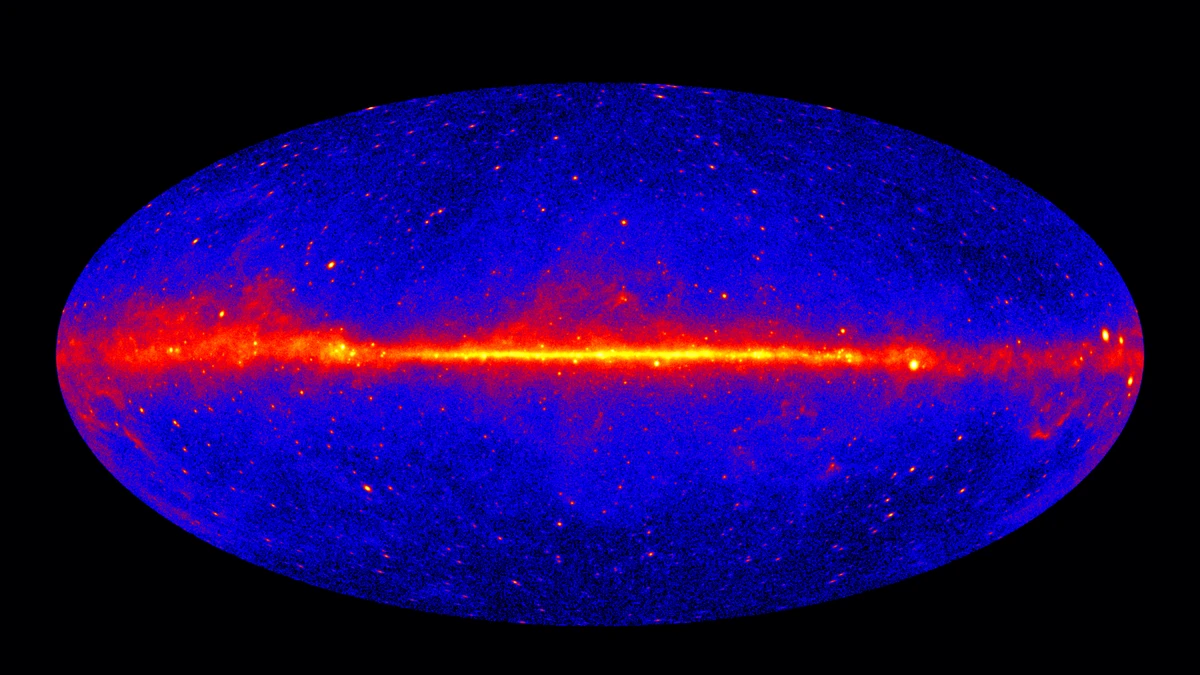 Gamma-ray astronomy delves into the high-energy realm, studying celestial sources
emitting gamma rays. Instruments like Fermi Gamma-ray Space Telescope, equipped with the Large Area Telescope (LAT) and Gamma-ray Burst Monitor (GBM),
play pivotal roles. LAT surveys the sky for high-energy gamma rays, while GBM detects
transient bursts. Complementary to Fermi, instruments like the Compton Spectrometer and Imager (COSI) will soon contribute to our understanding of gamma-ray sources. COSI observes gamma
rays from nuclear processes, providing insights into cosmic nucleosynthesis. Our team
is also involved in development of new concepts for future space-based gamma-ray missions
such as APT and AMEGO-X. In particular, our LSU group is collaborating on the construction
of the Antarctic Demonstrator for the Advanced Particle-astrophysics Telescope (ADAPT) balloon mission to be launched from Antarctica as a prototype of a future APT Compton
Telescope to observe MeV gamma-ray transients and provide sensitivity for thermal
WIMP dark matter. The collaborative efforts of these instruments significantly enhance
our comprehension of the energetic processes shaping the gamma-ray universe.
Gamma-ray astronomy delves into the high-energy realm, studying celestial sources
emitting gamma rays. Instruments like Fermi Gamma-ray Space Telescope, equipped with the Large Area Telescope (LAT) and Gamma-ray Burst Monitor (GBM),
play pivotal roles. LAT surveys the sky for high-energy gamma rays, while GBM detects
transient bursts. Complementary to Fermi, instruments like the Compton Spectrometer and Imager (COSI) will soon contribute to our understanding of gamma-ray sources. COSI observes gamma
rays from nuclear processes, providing insights into cosmic nucleosynthesis. Our team
is also involved in development of new concepts for future space-based gamma-ray missions
such as APT and AMEGO-X. In particular, our LSU group is collaborating on the construction
of the Antarctic Demonstrator for the Advanced Particle-astrophysics Telescope (ADAPT) balloon mission to be launched from Antarctica as a prototype of a future APT Compton
Telescope to observe MeV gamma-ray transients and provide sensitivity for thermal
WIMP dark matter. The collaborative efforts of these instruments significantly enhance
our comprehension of the energetic processes shaping the gamma-ray universe.
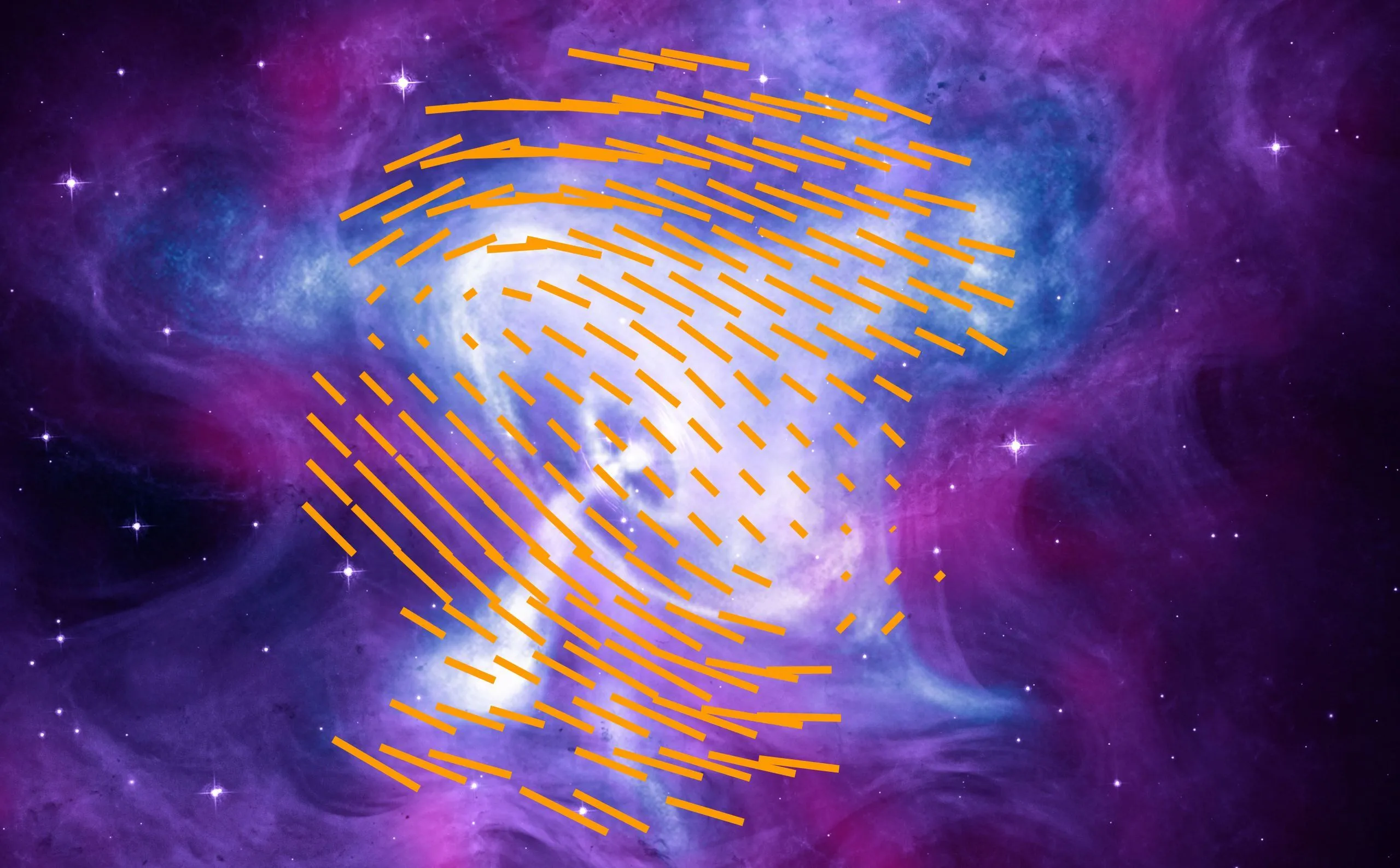 High-energy polarimetry is a specialized field in astronomy that focuses on measuring
the polarization of high-energy photons, shedding light on the magnetic and geometric
properties of cosmic sources. The Imaging X-ray Polarimetry Explorer (IXPE) is a crucial instrument designed to enhance our understanding of polarized X-rays.
Complementary to IXPE, the Compton Spectrometer and Imager (COSI) will also contributes to high-energy polarimetry, providing valuable insights into
the polarization properties of gamma-ray sources. These instruments collectively enable
astronomers to probe the underlying physical processes in extreme environments, offering
a more comprehensive understanding of the intricate magnetic and structural characteristics
of celestial objects emitting high-energy radiation.
High-energy polarimetry is a specialized field in astronomy that focuses on measuring
the polarization of high-energy photons, shedding light on the magnetic and geometric
properties of cosmic sources. The Imaging X-ray Polarimetry Explorer (IXPE) is a crucial instrument designed to enhance our understanding of polarized X-rays.
Complementary to IXPE, the Compton Spectrometer and Imager (COSI) will also contributes to high-energy polarimetry, providing valuable insights into
the polarization properties of gamma-ray sources. These instruments collectively enable
astronomers to probe the underlying physical processes in extreme environments, offering
a more comprehensive understanding of the intricate magnetic and structural characteristics
of celestial objects emitting high-energy radiation.
In addition to its primary high energy capabilities, CALorimetric Electron Telescope (CALET) performs a continuous monitoring of the Low Earth Orbit (LEO) radiation environment, including high-energy solar particle (SEP) events, inner Van Allen belt protons in the South-Atlantic anomaly, and relativistic electron precipitation (REP) events. CALET is used to identify and categorize potential REP events out of the CALET database, investigating their relationship with different magnetospheric drivers, such as electromagnetic ion cyclotron (EMIC) waves. We take advantage of magnetically-conjugate plasma-wave measurements from the NASA Van Allen Probes (VAPs) in the equatorial plane or the Arase Japanese satellite in highly-elliptic orbit. We use the large sample of REP events collected by CALET since its launch for statistical studies, exploring the correlation of their properties with solar-wind and geomagnetic conditions.
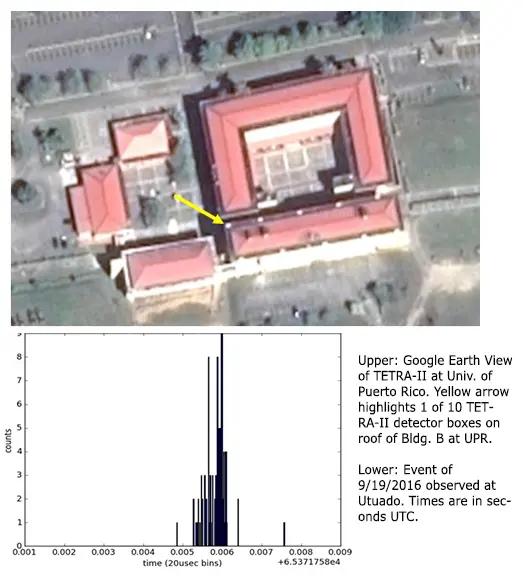 The TGF and Energetic Thunderstorm Rooftop Array (TETRA) experiment at LSU observed ground-level X-ray/gamma-ray bursts associated with nearby
lightning. Satellite observations of intense millisecond flashes of gamma rays (Terrestrial
Gamma Flashes, TGFs) produced at the tops of thunderstorms have shown that lightning
can accelerate electrons to very high energies, well above tens of MeV. TETRA, with
a set of detectors at LSU, in Panama, and in Puerto Rico (locations with high thunderstorm
activity) produced a catalog of TGFs produced by lightning near the Earth’s surface
and provided data on the detailed characteristics of the energetic radiation and the
associated thunderstorms, in particular correlated radiation and meteorological data.
The TGF and Energetic Thunderstorm Rooftop Array (TETRA) experiment at LSU observed ground-level X-ray/gamma-ray bursts associated with nearby
lightning. Satellite observations of intense millisecond flashes of gamma rays (Terrestrial
Gamma Flashes, TGFs) produced at the tops of thunderstorms have shown that lightning
can accelerate electrons to very high energies, well above tens of MeV. TETRA, with
a set of detectors at LSU, in Panama, and in Puerto Rico (locations with high thunderstorm
activity) produced a catalog of TGFs produced by lightning near the Earth’s surface
and provided data on the detailed characteristics of the energetic radiation and the
associated thunderstorms, in particular correlated radiation and meteorological data.